Bhutan — Trans-Bhutan Trail
The last Buddhist kingdom, carbon-negative and incomparably serene.
At a Glance
Why UHNW Travelers Choose Bhutan — Trans-Bhutan Trail
Bhutan has done something extraordinary with its privilege of geographic isolation: it has converted insularity into policy. The country is constitutionally mandated to maintain 60% forest cover. It has been carbon-negative since the inception of carbon accounting. Its tourism policy is explicitly high-value, low-volume by royal decree. The result is a destination that presents a coherent alternative to everything contemporary luxury travel is supposed to deliver — slower, quieter, more demanding physically, and more rewarding in proportion.
Bhutan has done something extraordinary with its privilege of geographic isolation: it has converted insularity into policy.
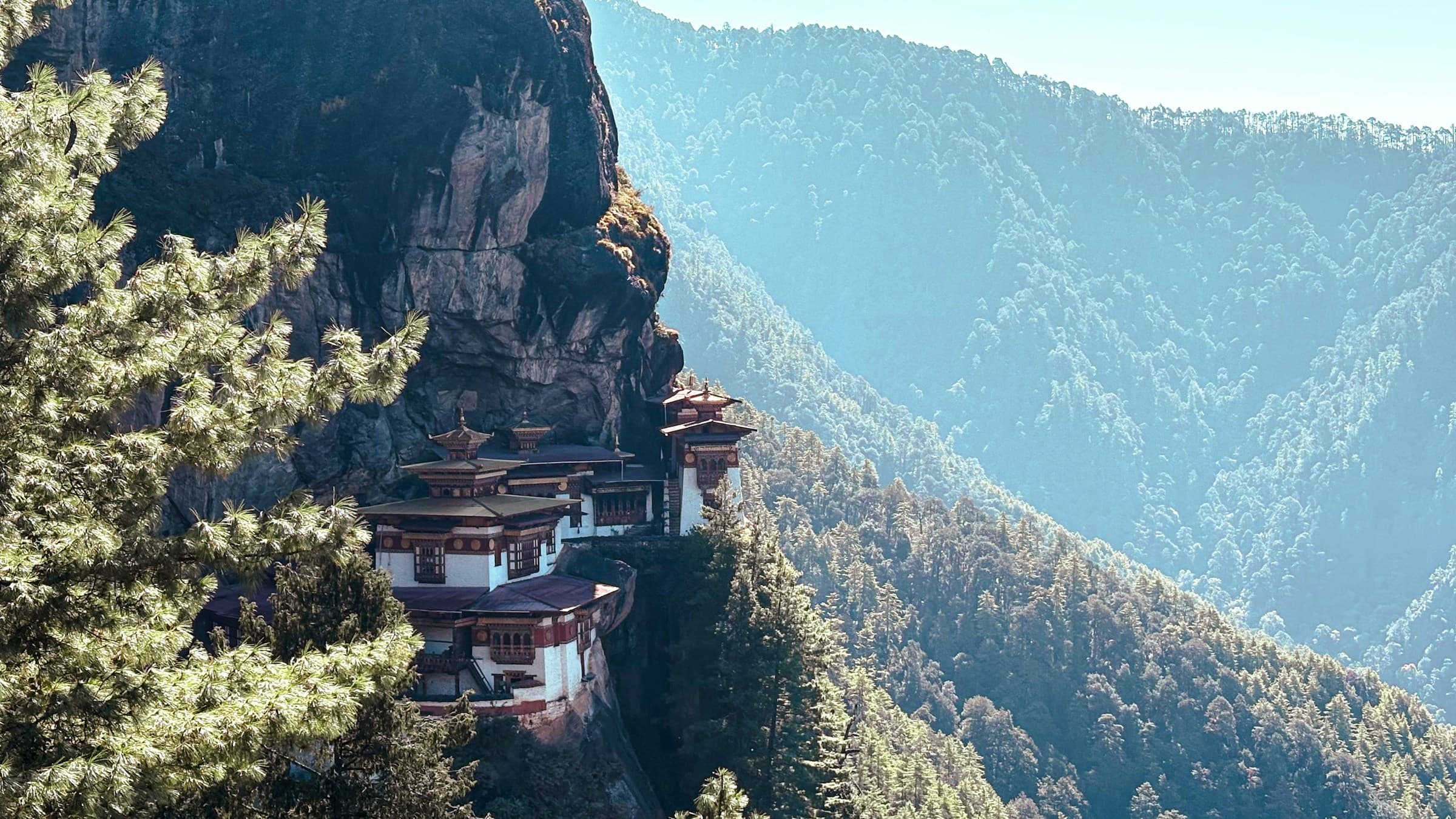
One brand operates five lodges across five valleys — the definitive architectural argument for the country: rammed earth lodges heated by wood fires, textile art woven by women whose grandmothers wove the same patterns, meditation pavilions where the silence is structural rather than affected. Each valley — Paro with Tiger's Nest, Punakha with its white-water and subtropical warmth, Gangtey with its black-necked crane wetlands, Bumthang with its ancient temple complexes — is a distinct ecological and cultural register. Seven days begins to scratch the surface.
The Trans-Bhutan Trail, reopened in 2022 after a 60-year hiatus, runs 403 kilometres from Haa in the west to Trashigang in the east — the old pilgrim and trade route through the kingdom's entire breadth. Sections of it, walked with a private guide and supported by lodge accommodation, constitute some of the finest hiking in Asia. The trail passes through villages where a Western trekker is still a notable event, past lhakhangs (temples) active since the 8th century, through rhododendron forests that bloom pink and crimson in April. It is the kind of walk that requires a week to begin and a month to do properly.

Bhutan measures prosperity not in GDP but in happiness — and after a week there, you understand why.


UHNW Suitability Profile
How Bhutan — Trans-Bhutan Trail rates across the five dimensions that matter most to ultra-high-net-worth travelers.
Signature Experiences

Getting There
Paro International Airport (PBH) is the sole commercial gateway. Drukair and Bhutan Airlines serve: Delhi (1.5h), Kathmandu (1h), Bangkok (4h), Kolkata (1h), Mumbai (3h), Singapore (5h). Flight times are fixed by pilot certification schedules — flexibility is limited. All visitors must book through a licensed Bhutanese tour operator or directly with the international luxury lodges, who manage visa and SDF arrangements. No visa obtained on arrival.
Best Time to Visit
March and April bring rhododendron bloom across all elevations — extraordinary visual reward for any outdoor itinerary, and the timing for the Paro Tsechu festival (March/April). October and November offer the clearest mountain visibility, post-monsoon landscapes in their greenest state, and the Thimphu and Punakha Tsechu festivals. May and June are warm and lush before monsoon; September is transitionally beautiful with waterfalls at full flow. December through February brings clear skies and temperatures that drop to near-zero at altitude — challenging but uncrowded, with excellent views.
Stability & Governance
Bhutan's Tourism Council of Bhutan manages access under the government's Gross National Happiness framework, with a constitutional mandate to balance economic development against cultural and environmental preservation.
Premium placements for luxury properties in Bhutan — Trans-Bhutan Trail. Reach UHNW travelers and advisors actively planning trips to this destination.
Frequently Asked Questions
How has the SDF reduction from $200 to $100 changed Bhutan's appeal?
The 2024 reduction to $100 per person per night makes the destination more accessible while preserving the high-value framework. At $100 SDF plus the leading lodge circuit's rates, a 10-night circuit still represents a substantial investment — but the psychological barrier of the previous $200 rate deterred some genuinely interested travellers. The reduction signals a government recalibration toward sustainable volume rather than maximum exclusivity while protecting environmental and cultural integrity.
Is the Trans-Bhutan Trail suitable for non-expert trekkers?
Sections of it are, with private guide support. The trail varies from 2,000m to 4,000m altitude; day sections between valley lodges can be walked by anyone in reasonable fitness. More challenging passes and multi-day stretches require trekking experience and altitude acclimatisation. The trail was designed as a pilgrim route, not a technical mountaineering challenge — but altitude effects should be respected. The five-valley circuit builds gentle acclimatisation days into the itinerary.
What is the Tsechu festival experience?
Tsechu are annual religious festivals held at each dzong, featuring cham (mask dances) performed by monks depicting scenes from Buddhist scripture and the life of Guru Rinpoche. The Paro Tsechu (March/April) and Thimphu Tsechu (September/October) are the most spectacular, drawing communities from across each valley. A private guide who can explain the iconography of each dance transforms the experience from colourful spectacle to genuine cosmological encounter. The leading lodge circuit times its peak season to align with the major festivals.
Can Bhutan be combined with Nepal in a single Himalayan journey?
Naturally — this is one of Asia's great compound itineraries. Kathmandu to Paro is a 1-hour flight on Drukair or Bhutan Airlines, and the contrast between Nepal's comparative openness and Bhutan's managed serenity is instructive. A typical 14-night programme might allocate 5 nights in Nepal (Kathmandu cultural circuit, Chitwan safari, or Everest base camp flight) and 9 nights in Bhutan. Both countries are served by the same regional hubs (Bangkok, Delhi, Singapore).
What is unique about Bhutanese textile art?
Bhutanese weaving (thagzo) is a living tradition using complex supplementary-weft patterning techniques unique to the country, producing cloth that requires months of work per piece. The designs encode cosmological and regional identity — each valley has recognisable pattern vocabularies. Kira (women's wrapped dress) and gho (men's robe) worn daily in the country mean these textiles are functional rather than museum pieces. Several weaving centres in Thimphu and Bumthang allow private visits with master weavers, and commissioned pieces can be arranged through the lodge circuit's cultural concierge.
Ready to Explore Bhutan — Trans-Bhutan Trail?
Whether you're planning a trip, advising a client, or promoting your property — Ultra Network connects the ecosystem.
Planning a journey and want it handled at the highest level?
We connect you with a specialist advisor who knows this destination intimately — someone who builds bespoke itineraries for ultra-high-net-worth travelers, handles every detail, and has direct relationships with the best properties and experiences on the ground.