Georgia — Tbilisi & Kakheti
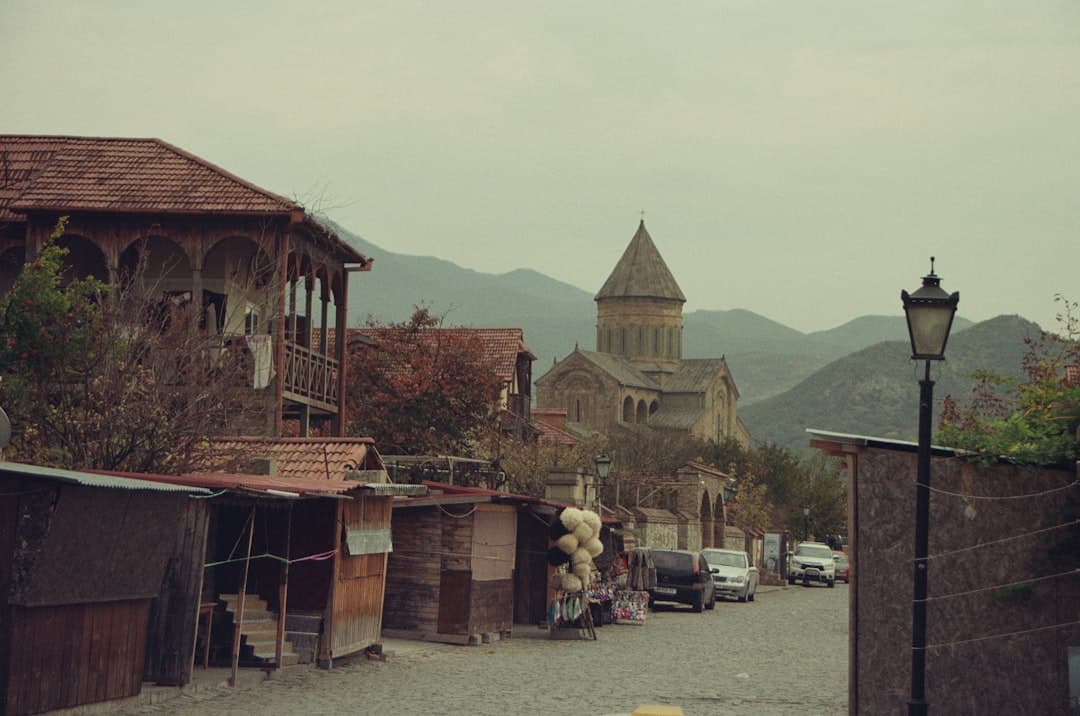
Eight thousand years of wine, walled in ancient amber stone.
At a Glance
Why UHNW Travelers Choose Georgia — Tbilisi & Kakheti
Georgia has achieved something rare in European travel: it has become genuinely fashionable among the global creative and culinary elite without yet suffering the consequences of that recognition. Tbilisi's old town — sulphur bath district, Art Nouveau merchant houses, medieval Narikala fortress above the Mtkvari river — functions as an outdoor museum that is simultaneously a living, raucous, deeply hospitable city. The wine, the food, and the nightlife are all extraordinary; the prices remain at a level that reads as a mismatch with the quality on offer.
Georgia has achieved something rare in European travel: it has become genuinely fashionable among the global creative and culinary elite without yet suffering the consequences of that recognition.
Kakheti, an hour and a half east of Tbilisi in the Alazani Valley, is the reason Georgia belongs in any serious consideration of the world's great wine destinations. Qvevri winemaking — fermenting whole grape clusters in large clay vessels buried underground — predates anything in France or Italy by millennia. The amber wines produced by this method have a texture and tannic structure entirely their own. A circuit of the Telavi-area wineries, combining serious natural wine producers with ancient monastery cellars, constitutes one of European viticulture's most distinctive days.
For the adventure-minded, the Greater Caucasus mountain range provides an entirely different register. Svaneti — a high-altitude valley of medieval watchtowers and glaciated peaks, accessible by mountain road or small aircraft — operates at the outer edge of European trekking. The Ushba massif, known locally as the 'Matterhorn of the Caucasus', frames one of the continent's most dramatic alpine landscapes. Georgia rewards return visits: the country is large enough, and varied enough, that two weeks barely scratches its surface.

Georgia makes wine in clay vessels buried in the earth, the same way it has for eight thousand years. Everything here is an act of continuity.


UHNW Suitability Profile
How Georgia — Tbilisi & Kakheti rates across the five dimensions that matter most to ultra-high-net-worth travelers.
Signature Experiences

Getting There
Tbilisi International Airport (TBS) — direct flights from Istanbul (3h), Dubai (4h), Paris (5h), Vienna (4h), Munich (4h). Private charter terminal available. Domestic flights from Tbilisi to Mestia (Svaneti, 45 min) or Kutaisi (1h) open the western regions. The Georgian Military Highway north to Kazbegi (3h drive) passes through some of the Caucasus's most dramatic scenery.
Best Time to Visit
May and June offer the optimal balance: warm temperatures (22–28°C in Tbilisi), vine in blossom in Kakheti, rhododendrons in the mountains, and pre-summer crowds. September and October are the vineyards' finest moment — the Rtveli harvest festival fills Kakheti with open vats and communal pressing, and the mountain foliage turns. Tbilisi's restaurant and arts scene is year-round. Winter in Gudauri and Bakuriani offers accessible skiing with a strong local character.
Stability & Governance
The Georgian National Tourism Administration (Discover Georgia) is well-resourced and active in promoting the country internationally, with particular emphasis on wine tourism, adventure, and cultural heritage.

Premium placements for luxury properties in Georgia — Tbilisi & Kakheti. Reach UHNW travelers and advisors actively planning trips to this destination.
Frequently Asked Questions
What makes Georgian qvevri wine distinctively worth seeking out?
Qvevri (buried clay amphora) fermentation produces orange or amber wines — white grapes fermented on their skins for months, yielding tannins, texture, and oxidative complexity absent from conventional white wine production. The flagship Rkatsiteli and Mtsvane grapes in amber form are genuinely unlike anything produced in conventional viticulture. The natural wine movement has retroactively validated a method Georgia never abandoned. A tasting flight at Pheasant's Tears or Jakeli estate is a revelation for any serious wine traveller.
How does Tbilisi compare to other European boutique city destinations?
Tbilisi punches well above its weight. The old town's architectural layering — Persian, Ottoman, Russian Imperial, and Soviet — is more historically complex than most Western European cities. The food scene is world-class and deeply affordable. The arts and music scene is internationally recognised (Tbilisi's Bassiani club is among Europe's most respected). The hotels, particularly Rooms and Stamba, are design-forward in ways that compare to Lisbon or Athens at significantly lower price points.
Is Svaneti accessible and safe for visitors?
Yes, with appropriate planning. Svaneti's Mestia is connected by domestic flight (45 min from Tbilisi) and, in summer, by a spectacular mountain road that takes 7–8 hours but passes through extraordinary scenery. The local Svan community is welcoming and proud; the medieval towers that punctuate every village were built for feudal defence and now serve as the backdrop to one of Europe's most characterful mountain cultures. Treks require a guide; the weather can change rapidly above 2,000m.
What is the best base for a Kakheti wine country stay?
Telavi is the administrative capital of Kakheti and the natural base: 90 minutes from Tbilisi, surrounded by vineyards, and within easy reach of Alaverdi Cathedral, Tsinandali estate (now a luxury hotel), and the best natural wine producers. The Alazani Valley opens in both directions from Telavi — east to Lagodekhi National Park, west toward Mtskheta. Staying inside the valley for two or three nights and visiting Tbilisi as a day trip (or bookending the trip) is the optimal structure.
How does Georgia integrate with a wider Caucasus or Black Sea itinerary?
Very well. Armenia's capital Yerevan and the monasteries of Geghard and Noravank are a 5-hour drive from Tbilisi or a short domestic flight — a natural extension for guests interested in early Christian architecture and brandy culture. Azerbaijan's Baku is 10 hours by road or 1h40m by flight, adding Caspian modernism and Azerbaijani cuisine. The Black Sea coast at Batumi, 5 hours by train, is a popular Georgian summer resort destination. A 12-night Caucasus circuit — Georgia, Armenia, Azerbaijan — is one of the region's great under-exploited travel programs.
Ready to Explore Georgia — Tbilisi & Kakheti?
Whether you're planning a trip, advising a client, or promoting your property — Ultra Network connects the ecosystem.
Planning a journey and want it handled at the highest level?
We connect you with a specialist advisor who knows this destination intimately — someone who builds bespoke itineraries for ultra-high-net-worth travelers, handles every detail, and has direct relationships with the best properties and experiences on the ground.