Montenegro — Bay of Kotor
Europe's newest riviera: superyachts, Byzantine walls, mountain fjords.
At a Glance
Why UHNW Travelers Choose Montenegro — Bay of Kotor
Montenegro is the Adriatic's most compelling new proposition for UHNW travellers. While the Croatian coast has become widely celebrated and now priced accordingly, Montenegro offers the same limestone-and-sea grandeur — and in several key respects surpasses it — with a frontier quality that rewards early adopters. Porto Montenegro, developed by Peter Munk with the explicit intention of creating a world-class superyacht hub, has delivered infrastructure that places Montenegro alongside Monaco, Antibes, and Palma as a primary Mediterranean berth.
Montenegro is the Adriatic's most compelling new proposition for UHNW travellers.
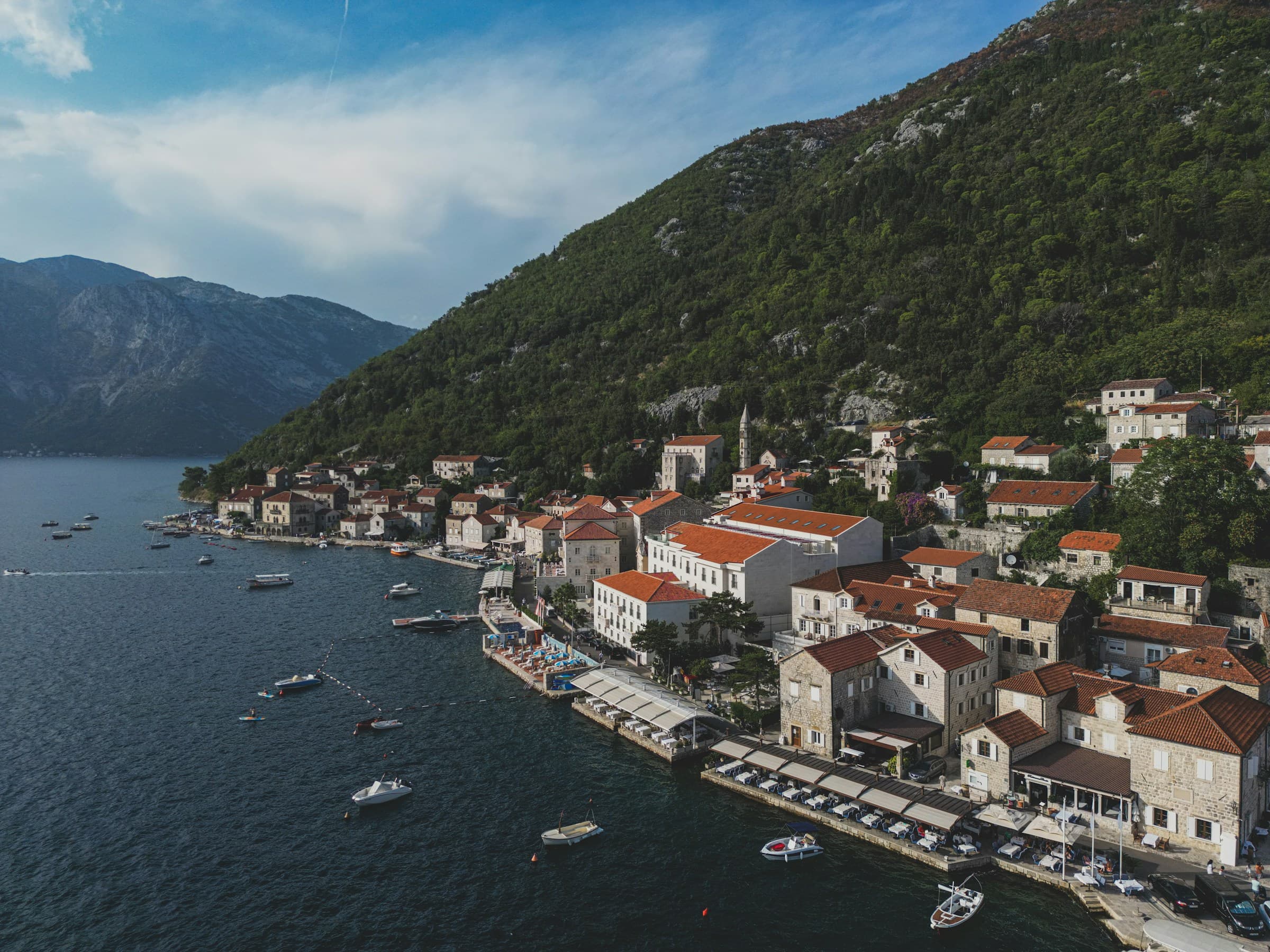
The Bay of Kotor is the physical centrepiece: a fjord-like inlet that penetrates 28 kilometres inland, bordered by walls of limestone karst rising over 1,700 metres. The light at golden hour — bouncing between water and cliff — is genuinely extraordinary. Kotor's medieval walled city, its 11th-century Cathedral of Saint Tryphon, and the ring of Byzantine and Venetian churches dotting the shoreline represent one of Europe's most concentrated historic landscapes. Unlike Dubrovnik, which has become a victim of its own fame, Kotor remains genuinely navigable.
The Sveti Stefan island-village resort defines the upper register — a 15th-century fishing settlement converted to private accommodation — offering a complete buyout option that has attracted successive generations of royalty, artists, and UHNW clients who require absolute privacy in a setting of unrepeatable beauty. A contemporary wellness resort on the Herceg Novi peninsula adds a longevity dimension with one of Europe's most rigorous metabolic-medicine spa programmes. Montenegro's Adriatic spring — May and June — is the finest time: warm enough to sail, empty enough to breathe.

At the birth of our planet, the most beautiful encounter between land and sea must have happened along the Montenegrin coast.


UHNW Suitability Profile
How Montenegro — Bay of Kotor rates across the five dimensions that matter most to ultra-high-net-worth travelers.
Signature Experiences

Getting There
Tivat Airport (TIV) is the optimal entry point — Aviator FBO is 5 minutes from Porto Montenegro marina by road. Private jet handling is efficient and the runway accepts large-cabin aircraft. For commercial connections, Dubrovnik (DBV) in Croatia offers better international coverage and is a scenic 90-minute drive. Montenegro Airlines and Wizz Air serve Tivat from multiple European hubs in summer. Transfers within the bay are most efficiently made by private tender or water taxi.
Best Time to Visit
May–June is the sweet spot: the Adriatic is warm enough to swim (22–25°C), tourist volumes are a fraction of July–August, and the limestone scenery glows in clear spring light. July–August brings peak heat and the arrival of the international sailing set — the marina atmosphere is electric but busy. September remains excellent with warm sea temperatures and diminishing crowds. Winter is mild but several seasonal properties close October–April.
Stability & Governance
The National Tourism Organisation of Montenegro (NTOM) is the state body responsible for promoting Montenegro as a destination and coordinating tourism policy under the Ministry of Economic Development and Tourism.
Premium placements for luxury properties in Montenegro — Bay of Kotor. Reach UHNW travelers and advisors actively planning trips to this destination.
Frequently Asked Questions
How does the Tivat superyacht marina compare to other Mediterranean marinas?
Porto Montenegro is the Adriatic's most ambitious marina development — 850 berths, 250-metre maximum LOA, and a full-service village with hotels, retail, and residences. It competes directly with Port Hercule in Monaco and Port Vauban in Antibes for large-yacht accommodation. The key advantage over Monaco is space: mega-yachts can berth without the tight manoeuvring constraints of Monaco's basin. Berthing rates are competitive with the French Riviera, and the surrounding landscape is considerably more dramatic.
What is the Sveti Stefan island buyout, and how is it arranged?
Sveti Stefan is a 15th-century fishing village on a peninsula converted into a private resort by a leading international luxury brand. The buyout option gives a single party exclusive use of the entire island — its stone cottages, private beach, library, and spa — typically for a minimum of five nights. It has historically been used for royal visits, high-profile weddings, and corporate retreats requiring absolute privacy. Lead times of 6–18 months are typical for peak-season buyout availability.
Is Montenegro accessible for guests arriving by commercial airline?
Yes, though routing requires thought. Tivat (TIV) is served by direct flights from London Gatwick, Vienna, Frankfurt, and Istanbul in summer. Outside peak season, connections via Podgorica or Dubrovnik are more reliable. Dubrovnik Airport in Croatia is 90 minutes by road and offers better year-round coverage. British Airways, easyJet, and Wizz Air all serve the region. For a seamless experience, private jet to Tivat remains the most practical option for guests staying at the superyacht marina or Sveti Stefan.
What sailing itinerary is recommended for a yacht based in Montenegro?
The Bay of Kotor itself merits three to four days of exploration — its scale surprises even experienced Adriatic sailors. From Porto Montenegro, a week-long circuit might run south to the Albanian Riviera (Sazan Island, the Karaburun Peninsula, and the ancient city of Butrint), then return north via Ulcinj and the Ada Bojana island. Alternatively, north to Dubrovnik and the Elaphiti Islands provides some of the Adriatic's finest sailing. Montenegro's uncrowded anchorages compare favourably to the busy Croatian coast in July.
How developed is Montenegro's fine dining and nightlife scene?
Montenegro's luxury dining scene is focused primarily within the Tivat marina village and the Boka Bay resort, where internationally benchmarked Italian and Japanese-fusion restaurants set a credible Mediterranean standard. Kotor's old city has several excellent konoba restaurants serving Adriatic seafood at a high level. The nightlife is yacht-set Mediterranean rather than Ibiza-scale: late dinners, marina bars, and occasional boat parties. Guests seeking Mykonos-level nightlife will find Montenegro more restrained, which is precisely its appeal for privacy-conscious travellers.
Ready to Explore Montenegro — Bay of Kotor?
Whether you're planning a trip, advising a client, or promoting your property — Ultra Network connects the ecosystem.
Planning a journey and want it handled at the highest level?
We connect you with a specialist advisor who knows this destination intimately — someone who builds bespoke itineraries for ultra-high-net-worth travelers, handles every detail, and has direct relationships with the best properties and experiences on the ground.