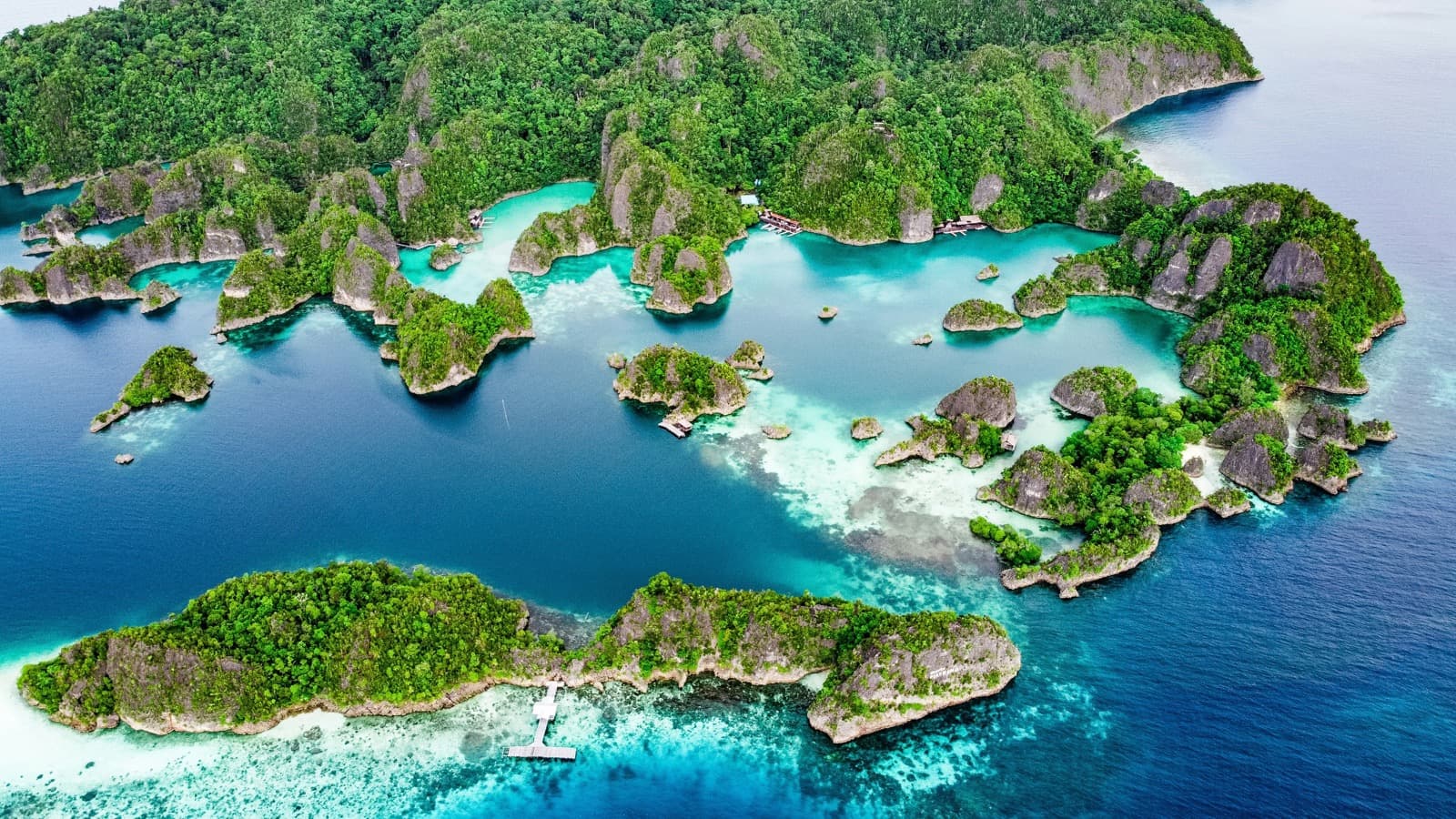

Why UHNW Travelers Choose Raja Ampat
Raja Ampat contains more marine species per hectare than any other place on Earth — it is, quite literally, where evolution was most creative underwater. For dive-obsessed UHNW travelers, this is the pilgrimage destination. Everything else is a compromise.
The archipelago's 1,500+ islands, set within Indonesia's Coral Triangle, host 75% of all known coral species and over 1,700 fish species. Manta ray cleaning stations, walking sharks, and pygmy seahorses are routine sightings. The snorkeling alone surpasses the diving at most other destinations.
What makes Raja Ampat special for ultra-luxury travel is not traditional amenity-driven luxury — it's the privilege of access. The remoteness filters out casual tourists, the eco-resort model limits capacity to a dozen guests, and the marine environment delivers encounters that money literally cannot buy elsewhere.
UHNW Suitability Profile
How Raja Ampat rates across the five dimensions that matter most to ultra-high-net-worth travelers.
Luxury Infrastructure
Intimate and eco-focused. Two eco-resorts on remote islands and private liveaboard dive vessels represent the top tier. This is eco-luxury, not resort luxury — expect 10-20 guests maximum.
Privacy
Exceptional by remoteness. The archipelago spans 40,000 square kilometres of largely uninhabited islands. Properties are separated by hours of ocean. No crowds, no noise, no light pollution.
Accessibility
Challenging. Jakarta to Sorong (4.5 hours domestic), then speedboat (2-4 hours) or chartered seaplane to resorts. The journey is part of the experience — and the filter.
Safety
Good in context. Marine safety is operator-dependent — choose PADI-certified dive operations. Political stability in West Papua is generally stable around tourist areas. Medical facilities limited; evacuation to Manado or Bali for emergencies.
Cultural Depth
Moderate. Papuan indigenous culture (traditional fishing, carving, dance). Marine biology is the primary cultural draw — Raja Ampat is the most biodiverse marine ecosystem ever recorded.
Best Time to Visit
October – April (dry season)
October through April offers the calmest seas and best visibility (30m+). Manta ray season peaks October-April at specific cleaning stations. May-September brings stronger currents and rougher seas but also large pelagic activity. The marine environment is extraordinary year-round.
- JanManta Ray Season (cleaning stations)
- FebManta Ray Season (cleaning stations)
- MarManta Ray Season (cleaning stations)
- AprManta Ray Season (cleaning stations)
- MayWalking Shark Season (reef flats)
- JunWalking Shark Season (reef flats)
- Jul
- Aug
- Sep
- OctManta Ray Season (cleaning stations)
- NovManta Ray Season (cleaning stations)
- DecManta Ray Season (cleaning stations)

Some of Raja Ampat's finest moments never appear on a booking site.
- Diving the Misool karst lagoons — underwater limestone cathedrals
- Manta ray cleaning station observation (non-disruptive approach)
- Night diving with walking sharks and cuttlefish
- Kayaking through uninhabited karst islands at dawn
- Papuan village visit with traditional fishing demonstration
- Liveaboard expedition through the Dampier Strait


Why Raja Ampat for…
Diving & Marine
75% of all known coral species and 1,700 fish species — the highest marine biodiversity ever recorded
Adventure & Expedition
Liveaboard expeditions through the Dampier Strait and kayaking through uninhabited karst island labyrinths
Cultural Immersion
Papuan village visits with traditional fishing demonstrations by communities who fish these reefs sustainably
Privacy Profile
Wilderness & Remote
40,000km² of largely uninhabited archipelago where properties are separated by hours of open ocean
Low Profile
The 4.5-hour flight from Jakarta filters out all but the most committed — access difficulty is the privacy mechanism
Seasonal Highlights
Oct – Apr
Manta Ray Season (cleaning stations)
Mar – Jun
Walking Shark Season (reef flats)
Oct – Dec
Calmest Seas & Peak Visibility
For a party, a principal or a private group.
Getting There
Private Aviation & Logistics
Domestic flights from Jakarta or Bali to Sorong (SOQ) — approximately 4.5 hours. From Sorong, speedboat transfers to resorts take 2-4 hours. Chartered seaplanes offer a faster (and spectacular) alternative for remote resorts. Most UHNW travelers fly private to Bali, then charter to Sorong.
Private Aviation Summary
Sorong (SOQ) is the gateway. Domestic flights from Jakarta (4.5 hours). Charter seaplanes or speedboats to resorts.

Why travellers plan Raja Ampat with an advisor.
Advisors work with local specialists who know the private places, the doors that open after hours and the tables with a handful of seats. Much of this cannot be booked through ordinary channels.
- Recommendations chosen for you
The hotel, the suite and the season that suit your trip. - An itinerary crafted for you
Cities, countryside and the moments in between, in the right order. - Every booking managed
Your advisor stays at hand for priority changes before and during the trip.
Stability & Governance
What Advisors & Travel Managers Should Know
Raja Ampat operates under Indonesian sovereignty with a dedicated marine protected area management authority (BLUD). The local government collects a marine park entry fee (IDR 1,000,000 for foreigners) that funds conservation and community programs. Papua's political situation is more complex than the rest of Indonesia, but the Raja Ampat regency is peaceful and welcoming to tourism. Infrastructure is basic but improving — this is frontier luxury, not resort luxury.
 Tourism Board: Raja Ampat Marine Protected Area Authority
Frequently Asked Questions
How does Raja Ampat compare to the Maldives for diving?
Raja Ampat is in a different category for biodiversity. The Maldives offers excellent reef diving, but Raja Ampat has 10x the species diversity in a fraction of the area. Raja Ampat suits serious divers and marine life enthusiasts; the Maldives suits travelers who want diving alongside resort luxury.
Is Raja Ampat difficult to reach?
Yes, by design. Jakarta to Sorong (4.5-hour flight), then 2-4 hours by speedboat. The remoteness is what protects the marine environment. For UHNW travelers, this journey is reframed as a feature — the difficulty of access is the filter that keeps it pristine.
When is the best time to dive Raja Ampat?
October through April for calmest seas and best visibility. Manta season peaks during this window. The marine life is exceptional year-round, but conditions are most comfortable in the October-April dry season.
What accommodation is available in Raja Ampat?
Ultra-luxury is limited but improving. Two eco-resorts on private islands — one with overwater cottages built from reclaimed wood, set within a private marine conservation area — represent the benchmark: intimate, eco-conscious, and genuinely remote. For the highest tier, private liveaboard yacht charters provide floating luxury with access to the most remote dive sites. This is not a destination for those expecting Maldives-style resort infrastructure — the accommodation is part of the frontier experience.
Can Raja Ampat be combined with Bali?
Yes, and this is the recommended approach. Bali provides the luxury resort infrastructure for acclimatisation and decompression, while Raja Ampat delivers the marine experience of a lifetime. The typical routing is Bali (DPS) → Sorong (SOQ) via Jakarta or Makassar, with domestic flights on Lion Air or Garuda — approximately 6–7 hours total. A 14-night Bali-Raja Ampat combination (7 nights each) is one of Asia's strongest diving-and-culture itineraries. Some liveaboard operators offer end-to-end packages including domestic transfers.
Can we arrive in Raja Ampat by private jet, and which airports suit us?
Sorong (SOQ) is the gateway. Domestic flights from Jakarta (4. 5 hours).
Can the stay in Raja Ampat come with a private chef, a butler and household staff?
Yes. Your advisor finds the villas and hotels in Raja Ampat that come with a private chef, a butler and household staff, and arranges the staff before you arrive.
Can you arrange every transfer in Raja Ampat for the whole party?
Yes. Your advisor arranges every transfer for everyone travelling, by air, by water and by road, from arrival to departure.
Can we take over a whole hotel, villa or private island in Raja Ampat just for our group?
Ask your advisor which hotels and villas in Raja Ampat can be taken for your group alone; they arrange exclusive use where it is offered.
How many of us can stay together in Raja Ampat, and where do large groups or extended families fit?
Your advisor plans for the whole party, finding the villas, estates and hotels in Raja Ampat with room to keep a large group or an extended family together.
Which are the very best suites and penthouses in Raja Ampat?
Your advisor finds the finest suites and penthouses in Raja Ampat for your dates, and secures the one that suits you.
How private can a stay in Raja Ampat be, and can we arrive and move around without being noticed?
The archipelago spans 40,000 square kilometres of largely uninhabited islands. Properties are separated by hours of ocean.
Ready to Explore Raja Ampat?
Planning a journey and want it handled at the highest level?
We connect you with a specialist advisor who knows this destination intimately — someone who builds bespoke itineraries for ultra-high-net-worth travelers, handles every detail, and has direct relationships with the best properties and experiences on the ground.