Uzbekistan — Silk Road Cities
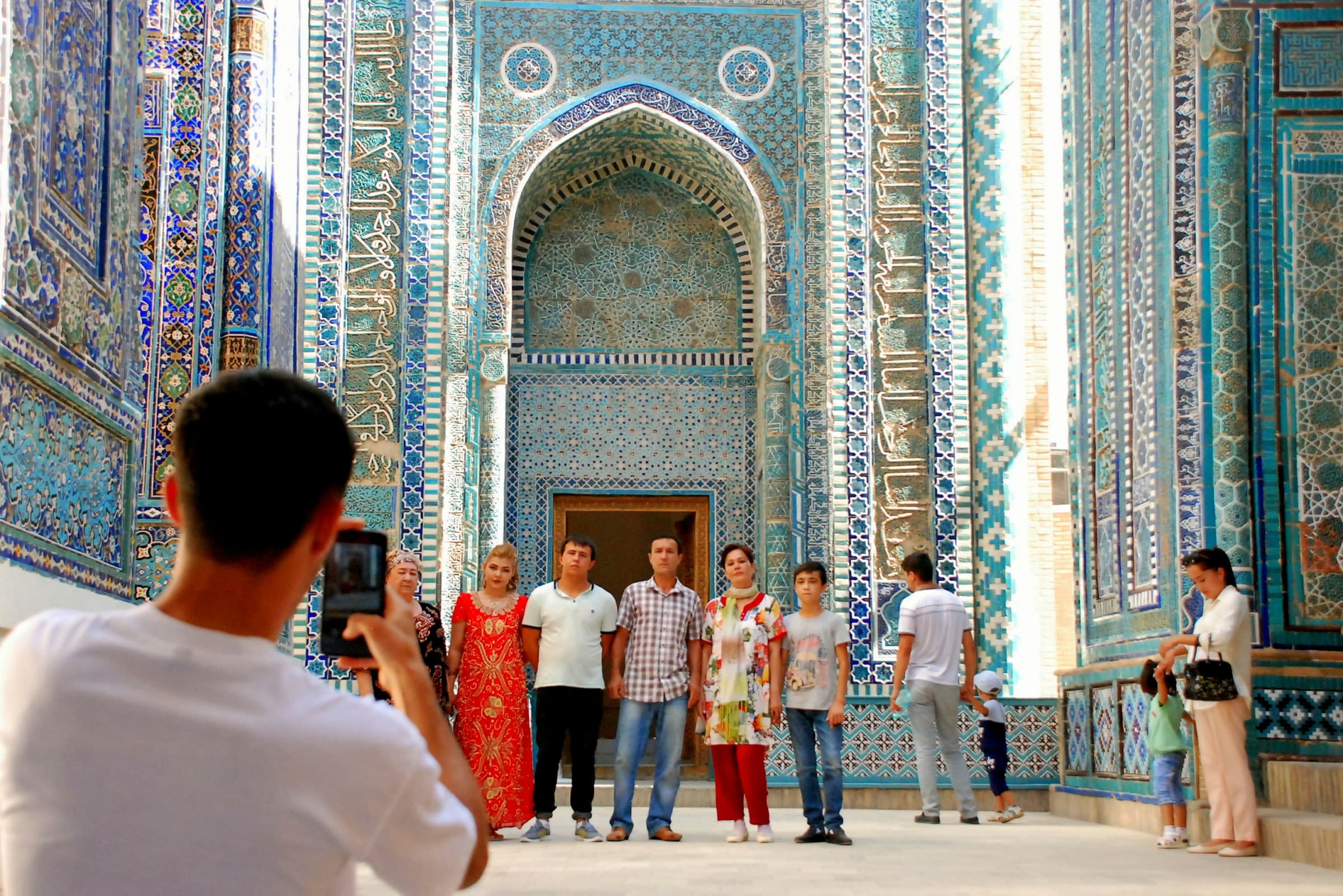
Tilework and turquoise domes where caravans once rested.
At a Glance
Why UHNW Travelers Choose Uzbekistan — Silk Road Cities
The Silk Road is a phrase that has been diluted into a thousand tour-operator clichés, but in Uzbekistan its meaning remains literal and visceral. Samarkand's Registan — three madrasas of cobalt and gold arranged around a sand-coloured plaza beneath an open sky — is arguably the most beautiful ensemble of Islamic architecture on Earth. It is also, against all probability, still largely uncrowded. A private evening access arranged through the city's leading luxury property places you inside the illuminated complex without another visitor in sight: a scale of privilege that money buys in very few places.
The Silk Road is a phrase that has been diluted into a thousand tour-operator clichés, but in Uzbekistan its meaning remains literal and visceral.
Bukhara's old city operates on a different register: a working medieval bazaar-town where the production of silk, spices, and metalwork has continued without significant interruption for millennia. The 9th-century Samanid Mausoleum stands modestly at the edge of a park, the oldest major Islamic monument in Central Asia and as architecturally sophisticated as anything built since. A private scholar-guided walk through the alleyways connecting the Kalon Mosque complex, the Ark Citadel, and the covered trading domes reveals a city that scholarship has not yet exhausted.
The practical window is closing. The arrival of top-tier international luxury brands signals what comes next: increased infrastructure investment, rising prices, and eventually, crowds. For a traveller willing to pioneer a destination where the architecture rivals Rajasthan, the cultural depth rivals Kyoto, and the Western visitor footprint is still essentially invisible, Uzbekistan in 2026 represents a rare and dwindling opportunity.

To stand in the Registan at sunset is to understand why men built empires just to have somewhere beautiful to pray.


UHNW Suitability Profile
How Uzbekistan — Silk Road Cities rates across the five dimensions that matter most to ultra-high-net-worth travelers.
Signature Experiences

Getting There
Tashkent International Airport (TAS) is the primary hub: direct flights from Dubai (3h), Istanbul (5h), Moscow (3h), Frankfurt (6h), and Doha (4h). Private charters land directly at Samarkand (SKD) — the optimal first-stop airport for a Silk Road circuit. High-speed Afrosiyob rail: Tashkent–Samarkand 2h, Samarkand–Bukhara 1.5h. Khiva is served by domestic flight from Tashkent (1h) or Urgench Airport (UGC) via short taxi.
Best Time to Visit
April and May bring mild temperatures (18–28°C), spring flowers in the Fergana Valley, and Navruz New Year celebrations — the optimal cultural and climatic window. September and October offer harvest markets, pomegranate season, and cooling temperatures (20–30°C) after summer's heat. Summer (June–August) in the lowland cities exceeds 40°C — uncomfortable though authentic. Winter visits to Samarkand in snow are hauntingly beautiful but cold.
Stability & Governance
Uzbekistan's National Tourist Organization has been central to President Mirziyoyev's reform agenda, with significant liberalisation and investment in tourism infrastructure since 2017. The country is positioning itself as a premium heritage destination.
Premium placements for luxury properties in Uzbekistan — Silk Road Cities. Reach UHNW travelers and advisors actively planning trips to this destination.
Frequently Asked Questions
Is the flagship Samarkand resort worth the premium over other local options?
For guests accustomed to international ultra-luxury standards: yes, unequivocally. The property's 19 residences sit adjacent to the Shah-i-Zinda necropolis, and its access agreements deliver experiences unavailable elsewhere — including private morning access to illuminated monuments. For budget-conscious travellers or those who prefer characterful local stays, boutique riads in Bukhara's old city offer genuine charm at a fraction of the cost.
How long does a serious Silk Road circuit require?
Seven nights is the absolute minimum for Samarkand–Bukhara–Khiva done properly. Ten to twelve nights allows for the Fergana Valley, Shakhrisabz (Tamerlane's birthplace, 1 hour from Samarkand), and a more leisurely pace in each city. Tashkent warrants a night in its own right — the Soviet modernist architecture, Chorsu Bazaar, and fine-dining scene are surprisingly compelling.
What is the food and wine situation for a UHNW palate?
Uzbek cuisine is genuinely excellent and deeply rooted: lamb plov cooked over open flame in cast-iron kazan, manti dumplings, freshly baked non bread, and extraordinary produce from the Fergana Valley. The restaurant scene at the high end, particularly around Tashkent and within the international luxury properties, is developing rapidly. Wine is limited — regional options exist but are inconsistent. Premium international wine lists are available at the top-tier properties and the better Tashkent restaurants.
Is Uzbekistan appropriate for families with children?
Yes. The cities are safe, the culture is notably welcoming to families, and the visual spectacle of the tilework and architecture holds children's attention in ways that many cultural destinations do not. Samarkand's Registan at golden hour is spectacular for all ages. The high-speed trains are comfortable and short enough for children, and the food is accessible. The flagship Samarkand resort's garden residences have private outdoor space.
How does Uzbekistan compare to Iran for Silk Road Islamic architecture?
Both countries contain world-class Islamic architectural heritage, but the practicalities differ enormously. Iran requires significant itinerary complexity for Western travellers (banking restrictions, dual-nationality issues, dress code requirements). Uzbekistan is straightforward: e-visa, visa-free access for many nationalities, international banking normal, and no dress restrictions outside religious sites. Architecturally, Samarkand and Bukhara rival Isfahan — and the absence of crowds in Uzbekistan currently makes for a more immersive experience.
Ready to Explore Uzbekistan — Silk Road Cities?
Whether you're planning a trip, advising a client, or promoting your property — Ultra Network connects the ecosystem.
Planning a journey and want it handled at the highest level?
We connect you with a specialist advisor who knows this destination intimately — someone who builds bespoke itineraries for ultra-high-net-worth travelers, handles every detail, and has direct relationships with the best properties and experiences on the ground.